
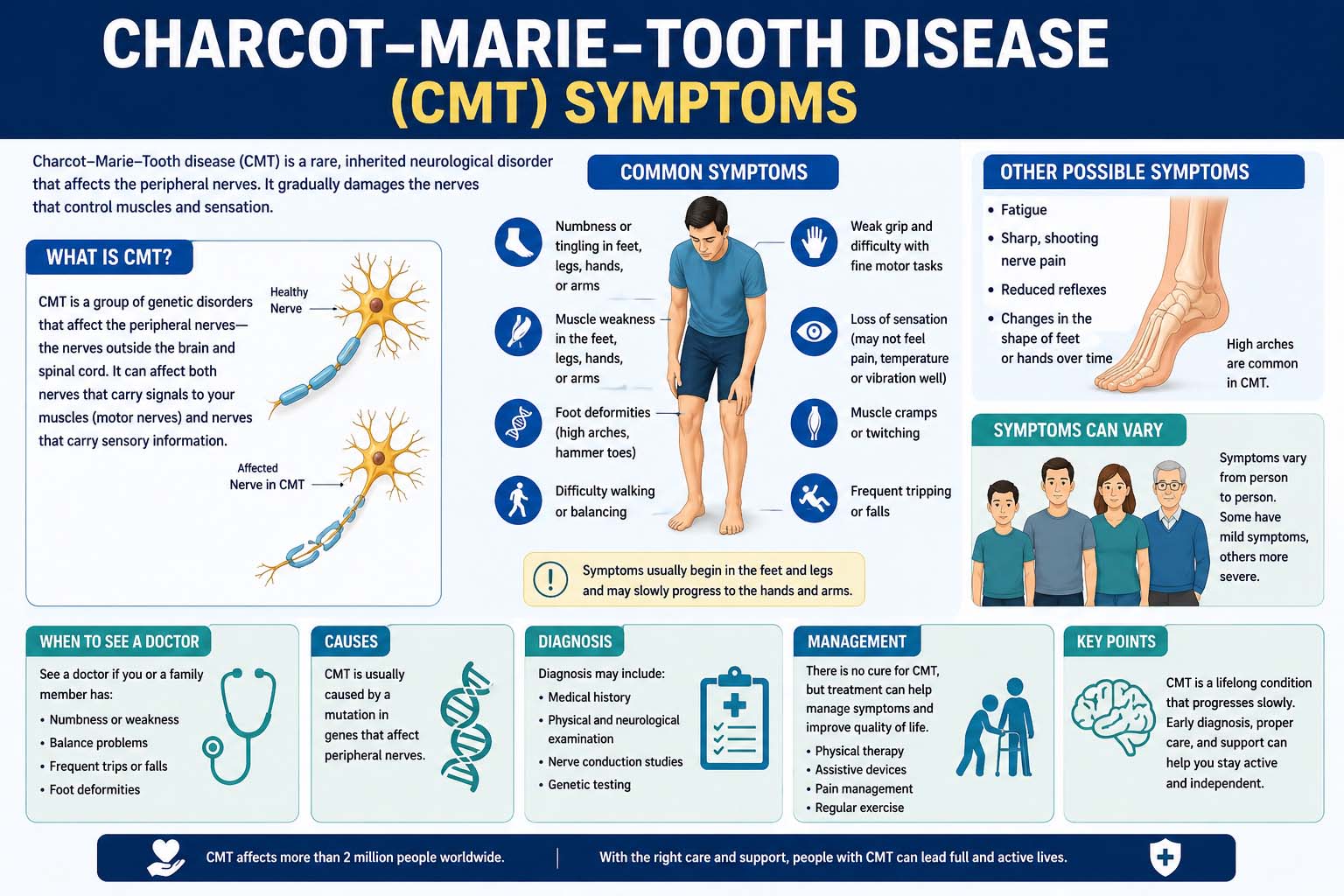
Understanding Charcot–Marie–Tooth disease symptoms is essential for recognizing this inherited neurological disorder early. Charcot–Marie–Tooth disease, commonly known as CMT, affects the peripheral nerves that control muscle movement and carry sensory signals between the brain, spinal cord, arms, and legs. Because the condition usually develops slowly, many people live with symptoms for years before receiving a diagnosis.
It can appear in childhood, teenage years, or adulthood depending on the specific genetic type. While symptoms vary, most cases begin in the feet and legs before affecting the hands and arms later. Therefore, learning about the signs can help people seek treatment sooner and improve quality of life.
Charcot–Marie–Tooth Disease Symptoms
The most common Charcot–Marie–Tooth disease symptoms often start with weakness in the feet and lower legs. Many people notice they trip more often or struggle to lift the front part of the foot while walking. This is known as foot drop and is one of the earliest signs of CMT.
Because certain leg muscles weaken over time, the calves may become thinner. As a result, this can create a noticeable shape where the lower legs look narrow compared to the thighs. Walking may become more difficult, especially on uneven surfaces or stairs.
Foot deformities are also common. High arches, curled toes, hammertoes, or flat feet can develop depending on the person. These structural changes may lead to discomfort, balance problems, and difficulty finding supportive footwear. Although it is a different condition, readers experiencing a hard, painful bump may also want to understand a bone spur on top of foot.
Some people also feel numbness, tingling, or burning sensations in the feet. Reduced sensation may cause injuries to go unnoticed, making foot care especially important.
Genetic Causes and Nerve Damage
Charcot–Marie–Tooth disease is caused by inherited genetic mutations that damage peripheral nerves or the protective covering around them called myelin. When nerves are damaged, signals move slowly or become weak. Consequently, this affects both movement and sensation.
There are several forms of CMT, including CMT1, CMT2, and rarer subtypes. Some forms primarily damage the myelin sheath, while others directly affect the nerve fibers. Therefore, each type can cause slightly different symptoms and rates of progression.
Because it is inherited, the condition often runs in families. However, some people may develop CMT even without a known family history due to spontaneous genetic changes.
Changes as the Disorder Progresses
As the disorder progresses, more Charcot-Marie-Tooth disease symptoms may appear. Hand weakness often develops later than leg symptoms. For example, people may struggle with tasks such as buttoning shirts, typing, writing, opening jars, or gripping small objects.
Fine motor skills can become less precise, especially when finger muscles weaken. Additionally, some people notice their hands becoming thinner due to muscle loss.
Balance difficulties are another common issue. Since the feet provide important sensory feedback for standing and walking, nerve damage can reduce stability. As a result, individuals may feel unsteady in the dark or on uneven ground.
Fatigue is also frequent. Muscles affected by nerve weakness must work harder, making normal activities feel more tiring than expected.
Some people experience cramps or nerve discomfort, while others mainly deal with weakness and reduced mobility.
How Severity Can Differ
When discussing Charcot-Marie-Tooth disease symptoms, it is important to understand that severity differs greatly. Some people have mild symptoms and remain active for life with little assistance. Others may need braces, mobility aids, or surgery to maintain movement.
Children with CMT may appear clumsy, run slower than classmates, or sprain their ankles often. Parents sometimes notice unusual walking patterns, frequent falls, or difficulty keeping up in sports.
Teenagers and adults may first realize something is wrong when they cannot perform physical tasks as easily as before. Walking long distances, climbing stairs, or standing for extended periods may become challenging.
Reduced reflexes, especially in the ankles, are common findings during neurological exams. Tremors may also occur in some types of CMT, particularly in the hands.
Although symptoms usually worsen slowly, progression often happens over many years rather than suddenly.
Symptoms of Charcot–Marie–Tooth Disease
The symptoms of Charcot–Marie–Tooth disease are not limited to movement issues. Sensory nerve involvement can cause reduced ability to feel pain, temperature, or touch in the hands and feet.
This loss of sensation increases the chance of unnoticed blisters, cuts, or pressure sores. Therefore, proper footwear and regular skin checks are important preventive steps.
Some people may develop scoliosis or hip problems, particularly in certain rare forms of the condition. Hearing problems or breathing weakness are uncommon but possible in specific subtypes.
Emotional effects can also occur. Living with a progressive inherited disorder may lead to stress, frustration, or anxiety. As a result, support from family, healthcare providers, and patient communities can be valuable.
How Is CMT Diagnosed?
Doctors diagnose Charcot–Marie–Tooth disease using medical history, physical examination, and specialized tests. They often ask about family members with similar symptoms, walking issues, or nerve disorders.
During the physical examination, a clinician may perform a head to toe assessment to evaluate muscle strength, reflexes, sensation, balance, and foot structure.
Nerve conduction studies measure how quickly electrical signals travel through nerves. Slowed signals may indicate damage to the myelin sheath, while weaker signals may suggest nerve fiber loss.
Treatment for Charcot–Marie–Tooth Disease Symptoms
There is no cure yet, but treatment focuses on managing Charcot–Marie–Tooth disease symptoms and preserving independence.
Occupational therapy can assist with hand weakness by teaching easier ways to complete daily tasks.
Braces such as ankle-foot orthoses are commonly used to improve foot drop and reduce falls. Additionally, custom shoes or inserts may relieve discomfort caused by high arches or toe deformities.
Supporting Daily Mobility
Many individuals with CMT continue working, exercising, and enjoying active lifestyles. Low-impact activities such as swimming, cycling, and yoga can support muscle health without placing excessive stress on joints. People planning a consistent activity schedule may also want to consider the best time to workout based on their energy levels and daily routine.
Maintaining a healthy weight is beneficial because extra body weight can increase strain on weakened muscles and feet.
Conclusion
Recognizing Charcot–Marie–Tooth disease symptoms can lead to earlier diagnosis and better management. Common signs include foot drop, leg weakness, balance problems, hand weakness, numbness, and progressive muscle changes. While symptoms vary widely, many treatments can improve mobility and quality of life.